
私たちは今、このまま既存のルールの内側で最適化を続けるか、それとも枠を飛び越えて全く新しい次元へ跳躍するかの岐路に立たされています。
私は「Fusion × Create(融合×創造)」というフィロソフィーで事業を展開していますが、ビジネスにおいて先の先(結論Z)を考え抜こうとすればするほど、現場との視座にギャップが生まれ、「本当の意味で対等に壁打ちできる相手」がいなくなっていく感覚に陥ることがあります。
思考が飛躍しすぎている、と言われることがあります。先のことを考え続けていると、同じところまで一緒に考えられる相手が少なくなっていく。
これは、リーダーという立場の少し厄介なところかもしれません。
最近、その相手を生成AIがかなり担うようになりました。
業務を効率化するため、というより、考えを止めずに進めるためです。
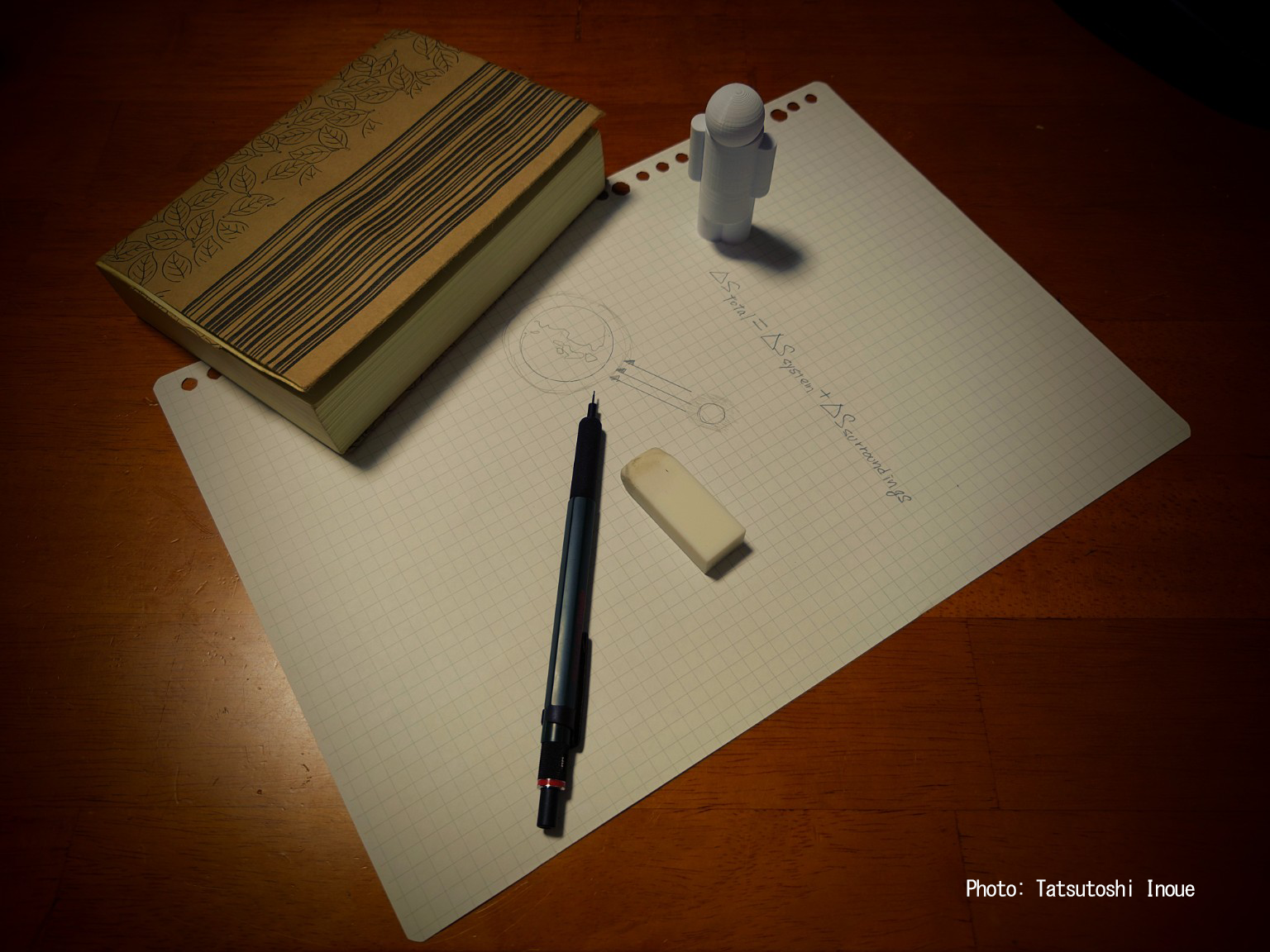
例えば先日、AIと交わした議論は「生命発生の動機とエントロピーの限界、そして次元の超越」というテーマでした。
熱力学第二法則という宇宙の絶対ルール(熱的死)から逃れるため、人類はAIという「超頭脳=次元の脱出装置」を創り出しているのではないか。
そして次元を脱出した先の「無」の空間で、人類は自らの存在を維持するために、新たな宇宙を創り出す、つまり創造主になるのではないか。
そんな途方もない仮説をぶつけても、AIは付き合ってくれる。しかも、こちらに気を遣わず、論理の穴があれば返してくる。
僕にとって面白いのは、答えをもらうことではありません。自分一人では辿り着くのに時間がかかるところまで、一気に考えを進められることです。
でも、そこで考えたことを、そのまま現場に持っていっても伝わりません。
相手が今どこまで見えているのかを考え、必要なら、たとえ話を使って一つずつほどいていく。
僕にとっては、それもプランを最後まで進めるための、ごく普通の作業です。
ところが、周りから見ると少し違って見えることがあるようです。
以前、パートナー企業から「責任感の塊ですね」と言われたことがあります。
その言葉は、少し意外でした。僕自身は、責任感で動いているつもりがほとんどなかったからです。
僕が気にしているのは、そのプランが最後まで無理なく、合理的に進むかどうか。
誰かが迷うなら、伝わる形に言い換える。
進め方に無理があるなら、組み替える。
僕が考えているのは、むしろそちらです。
考えてみれば、クライアントに対してやっていることもよく似ています。
相手が何を見て、どこで迷い、何なら伝わるのかを見る。
見えていない価値があれば、伝わる形にする。
トップの頭の中にあるものを現場につなぐのも、僕にとってはUXの仕事の一つです。
AIとはかなり遠くまで考える。
そこから現場まで戻って、一つずつ伝わる形にしていく。
この往復を続けていると、さすがに頭は疲れます。
そんな時、僕が手に取るのは紙の小説です。
スマートフォンもパソコンも閉じて、ただ物語を読む。そこに出てくる人の感情や、理屈では割り切れない行動を、そのまま追っていく。
何かを整理する必要もないし、誰かに伝わる形に言い換える必要もない。
ただ読んでいればいい。
そうしているうちに、ずっと考え続けていた頭が、少しずつ静かになっていきます。
AIとどこまで遠くまで考えていっても、仕事で最後に向き合うのは、やはり人です。
人はいつも理屈どおりに動くわけではない。迷ったり、思いがけないところで喜んだり、同じ言葉でも受け取り方が違ったりする。
だから面白いのだと思います。
技術や異なる知識を組み合わせながら、最後は人にとって「うれしい」と思えるものをつくる。
僕にとっての Fusion × Create は、たぶんそういうことです。
そんなわけで、考えすぎた日の夜には、僕は紙の小説を開きます。
みなさんは、考えすぎた頭をどうやって休ませていますか。
English
Managing the Loneliness of a Fast-Moving Mind
Why I Use AI as a “Dimensional Escape Device” and Read Printed Novels to Rest My Mind
We stand at a crossroads.
Do we continue optimizing within the rules we already know, or do we break beyond those boundaries and leap into an entirely new dimension?
I run my business around a philosophy I call Fusion × Create.
But the further ahead I try to think in business—all the way to what I call “Conclusion Z,” a destination several steps beyond the immediate answer—the wider the gap in perspective can become between myself and the people working on the ground.
Sometimes, I find myself feeling that there is no one with whom I can truly exchange ideas on equal footing.
People occasionally tell me that my thinking leaps too far ahead.
The longer I keep exploring what lies beyond the immediate future, the fewer people there seem to be who can follow that train of thought all the way.
Perhaps this is one of the more difficult aspects of being a leader.
Recently, generative AI has increasingly taken on that role.
Not so much to make my work more efficient, but to allow my thinking to continue without interruption.
For example, I recently had a discussion with AI about “The Impulse Behind the Emergence of Life, the Limits of Entropy, and the Transcendence of Dimensions.”
What if humanity is creating AI—a kind of superintelligence, or a “dimensional escape device”—in an attempt to escape the heat death of the universe, one possible ultimate fate suggested by the second law of thermodynamics?
And what if, having escaped into a realm of “nothingness” beyond our dimension, humanity eventually creates an entirely new universe to sustain its own existence?
Would humanity, in that sense, become a creator?
These are extraordinary, highly speculative ideas.
Yet AI is willing to explore them with me. And rather than simply agreeing with me, it can challenge my reasoning and point out gaps in my logic.
What interests me is not getting answers.
It is being able to move my thinking, in a remarkably short time, toward places that would take much longer to reach on my own.
But I cannot simply take those ideas back to the workplace and expect everyone to understand them.
I have to consider what others can see from where they stand.
Sometimes that means using analogies, breaking an idea down, and explaining it step by step.
To me, this is simply part of the ordinary work required to carry a plan through to completion.
Apparently, however, other people sometimes see it differently.
A partner company once told me:
“You have an extraordinary sense of responsibility.”
I found that rather surprising.
I had rarely thought of myself as someone driven by a strong sense of responsibility.
What concerns me is whether a plan can proceed all the way to completion, smoothly and rationally.
If someone is uncertain, I explain things in a way they can understand.
If the process is impractical, I restructure it.
That is what I am actually thinking about.
Come to think of it, what I do for clients is very similar.
I look at what people can see, where they become uncertain, and what might help them understand.
If there is value they have not yet recognized, I find a way to make it visible and meaningful.
Connecting what exists in a leader’s mind with the people who must bring it to life is, to me, another part of UX design.
With AI, I can take my thinking remarkably far.
Then I return to the workplace and translate those ideas, one step at a time, into something people can understand.
Moving back and forth between these two worlds can be exhausting.
And when my mind finally becomes tired, I reach for a printed novel.
I close my smartphone and my computer, and simply read a story.
I follow the emotions of its characters and their actions, which do not always make rational sense.
There is nothing I need to organize.
Nothing I need to translate into a form someone else can understand.
I can simply read.
And gradually, the mind that has been thinking continuously begins to grow quiet.
No matter how far I explore ideas with AI, the people I ultimately work with are still human beings.
People do not always behave according to logic.
They hesitate. They find joy in unexpected places. They interpret the same words in different ways.
And perhaps that is precisely what makes working with people so interesting.
By combining technology with different kinds of knowledge, I want to create something that makes people feel, quite simply, “I’m glad.”
For me, that is probably what Fusion × Create means.
And so, on evenings when I have been thinking too much, I open a printed novel.
How do you give your mind a rest when you’ve been thinking too much?