
数日前、妻から「使っているPCが起動しない」と相談があった。
そのPCには、まだ必要なデータが残っているはずだった。
だから最初に考えたのは、買い替えることではなく、どこまで戻せるかだった。
まず、状態を観察する。
電源は入る。起動処理も始まっている。
ブートローダーまでは動いているように見えるが、Windowsを最後まで読み切れず、途中で止まっているようだった。
OSのエラー画面も出ない。
BIOSを呼び出そうとしても、そこまで入ることができなかった。
完全に動かないわけではない。
ならば「壊れた」とひとまとめにするより、どこまで正常で、どこから先に問題があるのかを切り分ければいい。
次に試したのは、バッテリーの放電だった。
一度、電源まわりの状態をできるだけリセットしてみる。
ただ、このPCのバッテリーはなかなか減らない。
そこでUSB機器をいくつか接続し、少しでも電力消費を増やしてみた。
二日ほどかけて放電を試したが、状態に変化はなかった。
ここまでくると、外からできる確認には限界がある。
SSDの接触を含め、内部を一度確認した方が早そうだった。
そして、あまり妻を待たせたくない。
そこで、その日のうちに分解することにした。
精密ドライバーとプラスチック製のヘラを用意する。
これはWindows 11のタブレットPCなので、内部の集積度は高い。
簡単に開く機械ではない。
ただ、このシリーズはこれまでにもSSD交換やバッテリー交換で何度か開けている。構造は分かっていた。
小さなビスを順番に外していく。
なくさないよう、一つずつ小さなトレーに入れる。
次にLCDの縁にわずかな隙間を作り、プラスチックのヘラを差し込む。
ウィークポイントを探しながら、
パキ、パキ。
と、少しずつ勘合を外していく。
思ったよりあっけなくケースは開いた。
まず、バッテリーを外す。
小さなコネクターのロックを解除し、バッテリーを固定しているビスを順番に外していく。
次にSSDを覆っているアルミカバー。
このカバーは単なる保護板ではなく、ノイズシールドも兼ねている。
プリント基板側の小さな金具に、何か所かで噛み合うように取り付けられている。
ビスを外し、ここもパキッと外す。
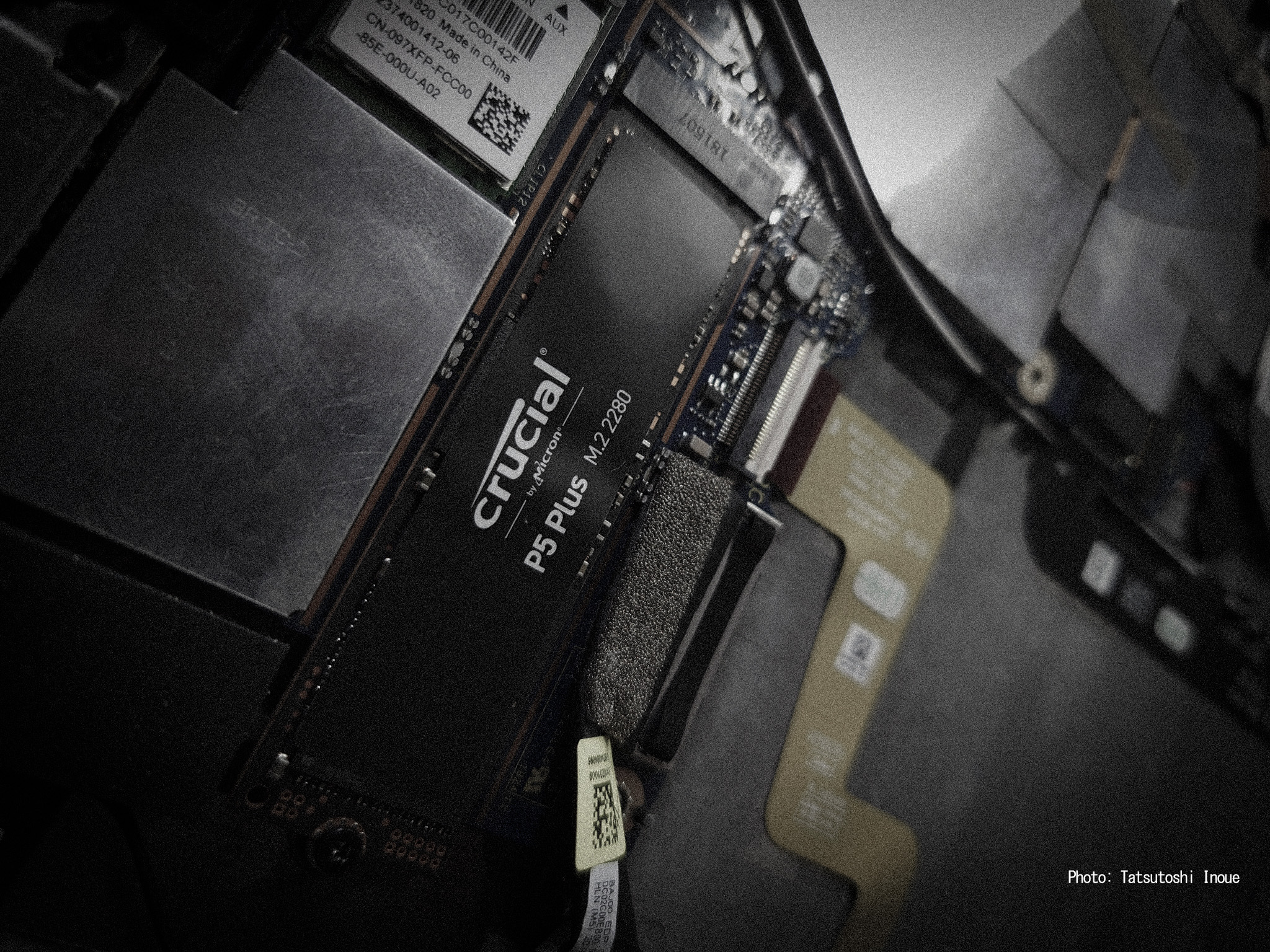
すると、ビンゴだった。
SSDが、目で見ても分かるほどずれていた。
これなら、起動しかけて途中で止まっていた症状ともつながる。
ただ、同時に別の疑問も湧いた。
そもそも、SSDがなぜずれたのだろう。
いったんSSDを外し、端子や基板を目視で確認する。
特に問題はなさそうだった。
そこでSSDを正しい位置まで差し直し、まずはそれだけをビスで固定した。
まだカバーは戻さない。
PCはケースを開いたままの、いわゆるバラック状態だ。
電源をつなぎ、スイッチを押す。
少しして、メーカーロゴが現れた。
ここまではいい。
続いてブート処理が始まる。
待っている時間が、妙に長く感じる。
そして――
Windowsが起動した。
ログイン画面に、妻のユーザー名も表示されている。
やった。
どうやらSSDの接触だったようだ。
いったんWindowsを正常に終了させ、電源を外す。
SSDを固定していたビスをもう一度外し、アルミカバーを基板側の金具に合わせる。
パキ、パキ。
何か所かを順番にはめ込み、最後にビスで固定する。
次はバッテリーだ。
コネクターを接続し、バッテリー本体をビスで固定する。
ここでも、すぐにはケースを閉じない。
もう一度電源を接続し、バラック状態のまま起動させる。
メーカーロゴが出て、Windowsも正常に立ち上がった。
バッテリーの表示を見ると、きちんと充電も始まっている。
よし、大丈夫だ。
もう一度Windowsを正常に終了させ、電源を外す。
PC本体を寝かせ、LCDを上からぴったりと位置合わせする。
端から、
パキ、パキ。
と、順番に勘合をはめ込んでいく。
全周に隙間や歪みがないことを確認してから、小さなビスを一本ずつ、少しずつ締めていく。
最後に、すべてのビスの締まり具合をもう一度確認する。
電源を接続し、起動。
メーカーロゴが出て、そのままWindowsが立ち上がった。
妻のユーザー名も、きちんと表示されている。
ふう。
PCを開けてから、ここまで約20分だった。
僕はこのシリーズのPCを3台使っている。
タブレットとして使え、キーボードを外すこともできる。
タッチペンも使える。
僕にとっては、とてもバーサタイルな機械だ。
似た使い方ができる製品はほかにもある。
たとえばSurfaceもそうだし、iPadも近い。
ただ、僕がこのシリーズを気に入っている理由は、それだけではない。
中へ入れること。
SSDを交換できる。
バッテリーも交換できる。
Windowsタブレットで、ここまでユーザー側が手を入れられるものは意外に少ない。
SurfaceやiPadのように、LCDが強力な接着で固定されている製品もある。
開けようとすれば、加熱しながら接着を剥がし、LCDを破損しないよう細心の注意を払わなければならない。
もちろん、そうした設計には薄さや剛性、量産性など、それぞれの理由がある。
ただ、僕の感覚では、あれは少し「開けちゃだめモデル」に近い。
僕が求めているのは、使うときだけ自由な道具ではない。
使い続けることにも自由がある道具だ。
こういうところが気になるのは、たぶん昔の仕事の影響もある。
かつて製造業、なかでも電機・電子機器メーカーの世界で製品づくりに関わり、その後は電子計測の分野で、国家標準や国際標準につながる仕事もしていた。
だからなのか、製品を見ると、今できることだけではなく、その中がどう作られ、どう維持され、故障したときにどこまで戻れるのかまで考えてしまう。
新しいことや、高性能であることはもちろん価値だと思う。
でも、それとは別に、
壊れたら終わりなのか。
手を入れれば続けられるのか。
消耗するものを交換できるのか。
という価値もある。
時計を選ぶときも、どこか似ている。
長く使いたいから、長く直せるものを選びたい。
買った瞬間の価値だけではなく、時間を重ねられることにも価値を感じる。
大切にするというのは、箱にしまって保存することではないのかもしれない。
使い、手を入れ、必要なら直しながら、関係を続けていくこと。
PCでも、時計でも、たぶん僕はそこを見ている。
ちなみに、この日の作業はもう就寝前だった。
作業を始める直前まで、僕は文庫本の小説を数ページ読んでいた。
疲れた脳のスイッチを切り替えたいとき、僕はほんの少しでも紙の小説を読むことにしている。
何かを整理する必要もない。
ただ物語を読む。
そうして少し頭を静かにしてから、精密ドライバーを手に取った。
組み上がったPCをほんの少しだけ充電して、妻のいるキッチンへ持っていった。
「やった。SSDだったよ」
そう言って笑顔でPCを渡すと、妻は少し驚いたような、感心したような顔で受け取った。
データも残っていた。
PCも、まだ使える。
直せるものを選んでいて、よかった。
English
Choosing What Can Be Repaired
A few days ago, my wife came to me and said that the PC she had been using would no longer start.
There was still data on it that she needed. So the first thing I thought about was not replacing the machine, but how far I could bring it back.
I started by observing what it was doing.
The power came on, and the startup sequence began. The boot loader appeared to be working, but Windows never finished loading. It simply stopped somewhere along the way.
There was no operating system error message. I could not even get into the BIOS.
The machine was not completely dead.
So rather than simply deciding that it was “broken,” I wanted to find out how far it was still working, and where the problem actually began.
The next thing I tried was discharging the battery.
I wanted to bring the power system as close as possible to a complete reset.
The problem was that the battery in this machine takes quite a long time to run down. So I connected several USB devices to increase the power consumption a little.
After about two days of trying to discharge it, nothing had changed.
At that point, there was only so much I could check from the outside. It seemed faster to open the machine and inspect the inside, including the SSD connection.
And more than anything, I did not want to keep my wife waiting.
So that evening, I decided to take it apart.
I prepared a set of precision screwdrivers and a plastic opening tool.
This is a Windows 11 tablet PC, so the internal components are packed very tightly. It is not the kind of machine that casually falls open.
But I had already opened other machines in this series several times to replace SSDs and batteries. I knew the basic construction.
I removed the tiny screws one by one, placing each of them in a small tray so that none would disappear.
Then I made a narrow gap along the edge of the LCD and slid in the plastic tool.
Finding the weak points in the clips, I worked my way around the case.
Snap. Snap.
The catches released one after another, and the case opened more easily than expected.
The first thing I removed was the battery. I released the small connector lock and took out the screws holding the battery in place.
Next came the aluminum cover over the SSD.
This cover is not simply a protective plate. It also acts as an electromagnetic shield, and is held against several small contacts on the printed circuit board.
I removed the screw and snapped the cover free.
And there it was.
Bingo.
The SSD was visibly out of position.
That would certainly fit the symptom: the computer had been beginning its startup sequence, but failing before Windows could fully load.
At the same time, another question occurred to me.
How had the SSD moved in the first place?
I removed it completely and inspected the contacts and the board. Nothing looked damaged.
So I reseated the SSD properly and fixed it in place with its screw.
I did not put the shield back on yet.
The PC was still lying open on the table, essentially in a bench-test state.
I connected the power supply and pressed the power button.
After a moment, the manufacturer’s logo appeared.
So far, so good.
Then the boot process began.
The wait felt much longer than it probably was.
And then—
Windows started.
My wife’s user name appeared on the login screen.
Yes.
It looked very much as though the SSD connection had been the problem.
I shut Windows down normally and disconnected the power again.
Then I removed the SSD screw once more, aligned the aluminum shield with the contacts on the board, and pressed it back into place.
Snap. Snap.
I secured it with its screw.
Next came the battery.
I reconnected the small connector and screwed the battery back into position.
Even then, I did not close the case yet.
I connected the power supply once more and started the computer while it was still open.
The manufacturer’s logo appeared, Windows started normally, and the battery indicator showed that charging had begun.
Good.
Everything looked right.
Once again, I shut Windows down properly and disconnected the power.
I laid the PC flat and carefully aligned the LCD with the body.
Starting from one edge, I pressed the clips back into place.
Snap. Snap.
After checking the entire perimeter for gaps or distortion, I tightened the small screws one by one, a little at a time.
Finally, I checked every screw once more.
I connected the power and switched the machine on.
The logo appeared, Windows loaded, and my wife’s user name appeared exactly as it should.
Whew.
From the moment I opened the machine to that final startup check, about twenty minutes had passed.
There are three PCs from this same product line in our household.
They can be used as tablets. The keyboards can be detached. They support a stylus.
For me, they are wonderfully versatile machines.
There are other products that offer similar flexibility. Microsoft Surface devices come to mind, as do iPads.
But versatility is not the only reason I have continued to use this particular line.
I can get inside it.
The SSD can be replaced.
The battery can be replaced.
That level of serviceability is surprisingly uncommon among Windows tablets.
Some devices, including Surface models and iPads, use displays that are firmly bonded to the case with adhesive. Opening them can mean applying heat, carefully separating the adhesive, and working with extreme care not to damage the LCD.
Of course, there are reasons for that kind of design—thinness, rigidity, manufacturing requirements, and many others.
Still, from my point of view, they feel a little like machines that are saying:
Please do not open me.
What I want is not simply a tool that gives me freedom while I am using it.
I also want the freedom to keep using it.
The fact that I notice things like this may have something to do with my earlier career.
I once worked in manufacturing, particularly in the electrical and electronic equipment industry, and later in electronic measurement, in work connected with national and international measurement standards.
Perhaps that is why I tend to look beyond what a product can do today.
I find myself wondering how it was built, how it can be maintained, and how far it can be brought back when something fails.
Newness has value.
Performance has value.
But there is another kind of value as well.
When something breaks, is that the end?
Can it continue if someone is willing to work on it?
Can the parts that inevitably wear out be replaced?
I think about watches in much the same way.
If I want to use something for a long time, I would rather choose something that can also be repaired for a long time.
The value of an object does not exist only at the moment we buy it.
There is value in being able to accumulate time with it.
Perhaps taking care of something does not mean keeping it untouched in a box.
Perhaps it means using it, maintaining it, repairing it when necessary, and continuing the relationship.
Whether it is a PC or a watch, I think that is what I tend to look for.
By the way, it was already close to bedtime when I started this repair.
Just before picking up the precision screwdriver, I had been reading a few pages of a paperback novel.
When I want to switch a tired brain into another mode, I try to read even just a few pages of a paper book.
There is nothing to organize.
Nothing that needs to be explained to someone else.
I can simply read the story.
After letting my mind become a little quieter, I picked up the screwdriver.
Once the PC was fully assembled, I let it charge for a little while and carried it into the kitchen, where my wife was.
“Got it. It was the SSD.”
I handed the computer to her with a smile.
She took it with a look that was somewhere between surprise and admiration.
The data was still there.
The PC still had life left in it.
I was glad I had chosen something that could be repaired.