
今年の夏は、本当に暑かった。
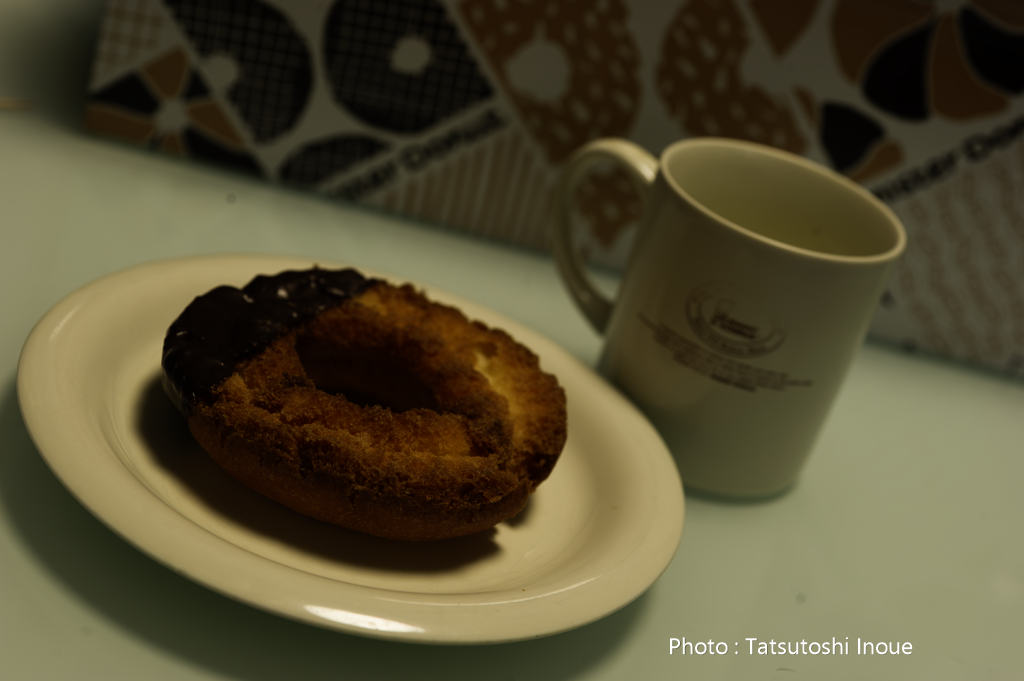
子どもたちから何度かドーナツをせがまれていたのだが、チョコレートのかかったものは持ち帰る途中で溶けてしまう。それを理由に、ずっと先延ばしにしていた。
その暑さもようやく終わりを告げ、涼しい日が数日続いた。
連休を控えた金曜日。仕事が少し早く終わったので、自宅のある駅の一つ手前で降りることにした。
――この涼しさなら、もういいだろう。
まだ夕暮れの淡い光が残る雑踏の中を、駅の近くにあるドーナツショップへ向かった。
店内は思いのほか混んでいた。ショーケースの前には学生や会社帰りの人が並び、レジを待つ列は10人ほどになっていた。
ショーケースを覗くと、半分ほどはもう空になっていて、棚の向こう側が見える。
肝心のドーナツは、かなり売れてしまっていた。
それでも、奥のほうにチョコレートのかかったものが残っていた。
シナモン、ストロベリーチョコのリング、チュロス。
トレーには10個ほどしか載らず、途中からは仕方なく重ねた。
結局、買ったのは16個だった。
店員は器用に二つの箱へ詰めてくれた。それを、いつも持ち歩いているエコバッグに入れた。
一つ前の駅で降りたのだから、ここからはタクシーで帰ればいい。
そう思ってタクシー乗り場へ向かうと、こちらにも10人ほどが並んでいた。
5分ほど待ったが、来たタクシーは一台だけだった。
そこで列を離れ、配車アプリを使うことにした。
迎車料金はかかるが、子どもを待たせるより、そのほうがよかった。
乗り場の近くでは、アプリで車を呼べない。
客同士のトラブルを避けるためらしい。
だから、私は200メートルほど先の幹線道路まで歩くことにした。
しかも、道路を渡った向こう側なら、自宅の方向へそのまま走り出せる。迎えに来るタクシーも、余計な方向転換をしなくて済む。
私はドーナツがたっぷり入ったエコバッグを提げ、人ごみの中を歩きだした。
その距離をほとんど歩き切り、あと20メートルほどというところで、交差点の信号が赤になった。
そして、目の前に「空車」のタクシーがちょうど止まった。
手を挙げると、スライドドアを自動で開けてくれた。
乗り込み、行き先を告げる。
すると運転手は少し怪訝そうに、
「反対方向ですよ。回らないと」
と言った。
「はい。回ってください」
そう答えた。
車はすぐに細い道へ入り、方向を変え始めた。
そして、運転手が意外なことを言った。
「本当は乗せたくなかったんですよ」
一瞬、何を言われたのか分からなかった。
理由を聞くと、駅前でタクシーを待っている人たちのために、この車は向かっていたのだという。
私は事情を説明した。
駅前の乗り場で待っていたこと。
車がなかなか来なかったこと。
アプリで呼ぶために、ここまで歩いてきたこと。
そして、その途中で偶然この車に出会ったこと。
それでも彼にとっては、駅で待っている人たちを乗せることのほうが大切だったらしい。
「それなら、ここで降ろしてください。止めてください」
そう伝えた。
「もう乗せたからいいんですけど」
彼はそう答えた。
ならば、と私はそのまま乗ることにした。
少し驚いてはいた。
けれど同時に、これは私の知らない話なのだとも思った。
ならば、もう少し聞いてみよう。
「タクシーは、まだ足りないんですか?」
以前にも、横浜ではタクシーが足りないという話を聞いたことがあった。
彼は最初、車が足りないのだと言った。
ところが少し話すと、
「足りていますよ。この時間が混んでいるんです」
とも言った。
少し不思議だった。
私はさらに聞いた。
「今のお話は、ほかの人にも知ってもらったほうがいい話ですか?」
彼は最初、質問の意味が分からなかったようだった。
「つまり、こういうことは皆に伝えたほうが役に立ちますか?」
そう尋ねると、
「役に立つと思いますよ。広めてください」
と答えた。
私は昔から、知見は広めるに限ると思っている。
知らなかったことを誰かが教えてくれたのなら、それは共有されたほうがいい。
少なくとも、そのときの私はそう思った。
ただ、帰宅してから、ほんの少しだけもやもやが残った。
実は、同じようなことは以前にも何度かあった。
タクシー乗り場を離れ、アプリで呼べる場所へ向かう途中で空車に出会い、そのまま乗せてもらう。
それまで、何か言われたことは一度もなかった。
「本当は乗せたくなかった」
そう言われたのは、今回が初めてだった。
後になって、念のためタクシー会社に問い合わせてみた。
ほんの少し、もやもやが残ったからだった。
もちろん、苦情を入れたかったわけではない。
あの話が、会社としての方針なのか、業界に共通するマナーなのか、それとも一人の運転手の考えなのかを知りたかった。
答えは明快だった。
そのような会社の方針も、業界共通のマナーもないという。
途中では乗客を乗せないつもりなら、「回送」と表示するのが適切だとも教えてくれた。
担当者は、どの駅で、どの運転手だったのかを確認しようとした。
指導するという。
私は答えなかった。
あの運転手を困らせたかったわけではない。
むしろ彼は、いったん乗せた客には普通なら言わないであろう本音を、私に話してくれた。
そのおかげで私は、ひとつ、知らなかった世界を見ることができた。
今になって思えば、彼も誰にでもあの話をしたわけではなかったのかもしれない。
私が反論するより先に、なぜそう思うのかを聞こうとしたから、少しずつ話してくれたのかもしれない。
本当のところは分からない。
ただ、一つだけ、あとになって腑に落ちたことがある。
私はたまたま、タクシー乗り場へ向かう空車の流れ、その「上流」で彼に出会ったのだ。
運転手から見れば、その車は駅前で待つ人たちへ届ける途中の一台だったのかもしれない。
もし乗り場を通り過ぎたあとの「下流」で出会っていたら、同じ空車でも彼の受け止め方は違ったのではないか。
私の側から見れば、別の景色だった。
私はすでに列を離れ、別の手段へ切り替えていた。
あと20メートル歩き、信号を渡れば、そこで配車アプリを使うつもりだった。
そこなら、迎えに来るタクシーも方向転換をしなくて済む。
そして、その直前に「空車」が現れた。
私には、それが横入りではなく、ひとつの出会いに見えた。
私は早く家へ帰れる。
タクシーも駅まで空車で走る距離を短くできる。
ビジネスなら、双方にとって機会が生まれた、と考えるところだろう。
けれど彼には、違う正しさがあった。
駅で待っている人を乗せたい。
その思い自体は、今なら分かる。
ただ、その思いは利用者からは見えない。
こちらに見えていたのは、公道に止まった一台の「空車」だけだった。
人と人が衝突しているように見えて、実はお互いが違う地図を見ていただけなのかもしれない。
そして私は、もう一つ考えた。
あのとき、本当に紳士的でいたかったのなら、降りればよかったのだ。
「そういうことでしたら、私はここで降ります。どうぞ駅で待っている方を迎えに行ってください」
そう言って、あと20メートル歩き、予定どおりアプリで別の車を呼べばよかった。
それだけのことだった。
紳士でいるというのは、相手を言い負かすことではないのだと思う。
自分の正しさを証明するために、相手の正しさを壊す必要もない。
別の選択肢を持っていれば、勝たなくてもいい。
もしかすると、余裕とはそういうものなのかもしれない。
家に着いたころには、すっかり暗くなっていた。
エコバッグの中には、16個のドーナツが入っていた。
次に同じことがあったら、私はたぶん降りる。
そのほうが、少しだけ、自分がなりたい人間に近い気がする。
English
Sixteen Doughnuts and Someone’s Sense of What Is Right
This summer was unbearably hot.
My children had asked me several times to bring home doughnuts, but I kept putting it off. Anything covered in chocolate would melt on the way home. That had become my excuse.
At last, the heat began to fade, and we had several cooler days in a row.
It was Friday, just before a long weekend. I finished work a little early and decided to get off one stop before the station nearest my home.
—It should be cool enough now.
There was still a faint trace of evening light over the crowd as I made my way to a doughnut shop near the station.
The shop was busier than I had expected. Students and people on their way home from work stood in front of the display cases, and about ten people were waiting to pay.
When I looked into the cases, nearly half of them were already empty. I could see through the gaps to the other side.
Most of the doughnuts were gone.
Still, toward the back, a few chocolate-covered ones remained.
Cinnamon. Strawberry-chocolate rings. Churros.
The tray could hold only about ten, so eventually I had no choice but to start stacking them.
I bought sixteen in the end.
The clerk skillfully packed them into two boxes, and I put them into the reusable bag I usually carry with me.
Since I had got off one station early, I thought I would simply take a taxi the rest of the way home.
But when I reached the taxi stand, there were about ten people waiting there too.
I waited for around five minutes, but only one taxi arrived.
So I left the line and decided to use a taxi-dispatch app instead.
There would be a pickup fee, but that seemed better than keeping the children waiting.
You cannot call a taxi through the app from immediately around the taxi stand.
Apparently, the restriction is there to prevent disputes among passengers waiting nearby.
So I decided to walk about 200 metres to the main road.
If I crossed to the other side, the taxi coming to pick me up could continue directly toward my home without having to turn around unnecessarily.
Carrying a reusable bag full of doughnuts, I started walking through the crowd.
I had covered almost the entire distance. With only about twenty metres left to go, the traffic light at the intersection turned red.
And an “AVAILABLE” taxi stopped directly in front of me.
I raised my hand, and the driver opened the sliding door automatically.
I got in and told him where I wanted to go.
He looked slightly puzzled.
“That’s in the opposite direction. I’ll have to go around.”
“That’s fine. Please do.”
The taxi immediately turned into a narrow side street to change direction.
Then the driver said something I did not expect.
“To be honest, I didn’t really want to pick you up.”
For a moment, I did not understand what he meant.
When I asked why, he explained that he had been on his way to the station to pick up the people waiting at the taxi stand.
So I explained what had happened on my side.
I had been waiting at that taxi stand.
Very few taxis had been arriving.
I had left the line because I was walking somewhere I could use the app.
And on the way there, I had happened to come across his taxi.
Even so, to him, the people waiting at the station seemed to take priority.
“In that case, please let me out here. Stop the car.”
That was what I told him.
“Well, I’ve already picked you up now.”
So I stayed in the taxi.
I was a little surprised.
But at the same time, I realized that he was telling me something I had never known.
If so, perhaps I should hear a little more.
“Are there still not enough taxis?”
I had heard before that Yokohama had a shortage of taxis.
At first, he said there were not enough cars.
But as we talked, he also said,
“There are enough. It’s just busy at this time of day.”
That struck me as slightly odd.
So I asked another question.
“Is what you’ve just told me something that more people should know?”
At first, he did not seem to understand what I meant.
“I mean, would it be useful if people knew about this?”
“Yes,” he said. “I think it would. Tell people.”
I have always believed that useful knowledge is better shared.
If someone tells me something I did not know, then more people knowing it should, in principle, be a good thing.
At least, that was what I thought at the time.
Still, after I got home, a faint sense of unease remained.
In fact, I had experienced something similar several times before.
I had left a taxi queue, walked toward a place where I could call one through an app, encountered an available taxi along the way, and simply got in.
No driver had ever said anything about it.
This was the first time anyone had told me,
“I didn’t really want to pick you up.”
Later, I called the taxi company to ask about it.
A small sense of uncertainty had stayed with me.
Of course, I was not calling to make a complaint.
I simply wanted to know whether what the driver had told me was company policy, a generally accepted rule within the taxi industry, or just the view of one individual driver.
The answer was clear.
There was no such company policy.
Nor was there any industry-wide rule of that kind.
They also told me that if a driver did not intend to pick up passengers along the way, the appropriate thing would be to display “OUT OF SERVICE.”
The person on the phone then tried to find out which station it had happened at, and which driver it had been.
They said they would speak to him.
I did not tell them.
I had not called because I wanted to cause trouble for that driver.
If anything, he had told me something that a driver would not normally say to a passenger once they were already in the car.
Because he did, I was able to glimpse a world I had not known existed.
Looking back, perhaps he would not have said those things to just anyone.
Perhaps because I chose to ask why he felt that way, rather than immediately argue with him, he gradually told me more.
I do not really know.
But later, one thing began to make sense.
I had happened to meet him “upstream” in the flow of available taxis heading toward the station taxi stand.
From his point of view, perhaps his taxi was already one of the cars on its way to the people waiting there.
Had I encountered the same taxi “downstream,” after it had passed the station, perhaps he would have felt differently about picking me up.
From where I stood, the landscape looked different.
I had already left the queue and switched to another way of getting home.
Another twenty metres, across the intersection, and I would have used the app.
From there, the taxi coming to collect me would not even have needed to turn around.
And just before I reached that point, an “AVAILABLE” taxi appeared in front of me.
To me, it did not look like jumping a queue.
It looked like an encounter.
I could get home sooner.
The taxi could avoid travelling all the way to the station without a passenger.
In business, one might say an opportunity had appeared for both sides.
But he had a different sense of what was right.
He wanted to pick up the people waiting at the station.
I can understand that now.
But his intention was invisible to the passenger.
All I could see was an “AVAILABLE” taxi stopped on a public road.
What looks like a conflict between two people may sometimes be nothing more than two people looking at different maps.
And then I thought of something else.
If I had really wanted to behave like a gentleman that evening, I should have got out.
“I understand. In that case, I’ll get out here. Please go and pick up the people waiting at the station.”
I could have said that, walked the remaining twenty metres, and called another taxi through the app as I had originally planned.
That would have been all.
Being a gentleman, I think, is not about defeating the other person in an argument.
I do not need to destroy someone else’s sense of what is right in order to prove my own.
If I have another option, I do not have to win.
Perhaps that is one form of composure.
By the time I reached home, it was completely dark.
Inside the reusable bag were sixteen doughnuts.
If the same thing happens again, I think I will get out.
I have a feeling that would bring me a little closer to the person I want to be.